When Open Source Goes Wrong
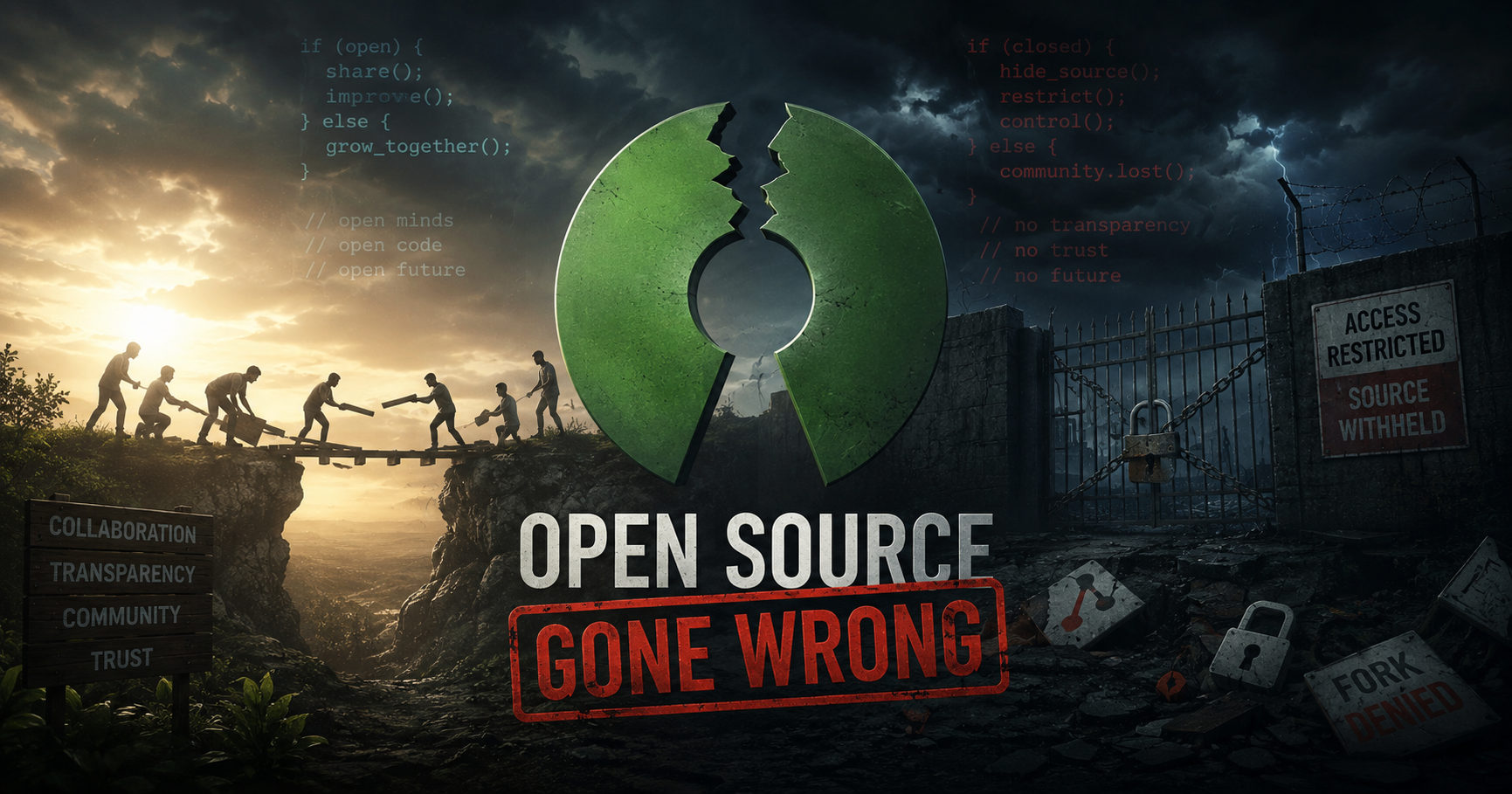
Over the past few months, I’ve been reflecting on my experience creating OpenHPSDR‑Zeus, and more broadly, what it means to build software in the age of Generative AI.
This isn’t intended to criticise any individual or revisit old disagreements. Instead, it’s a reflection on how easily open source projects can drift away from the very principles that made them possible.
It Started as a Personal Project
When I began writing OpenHPSDR‑Zeus, I wasn’t trying to build the next major SDR application.
I simply wanted a modern Software Defined Radio application that I would enjoy using myself.
The SDR landscape had become fragmented. Much of the software available had evolved over many years, carrying the weight of old design decisions and aging user interfaces. I wanted to explore what a modern SDR application could look like using today’s tools, technologies and development practices.
Very quickly, other developers became interested and joined the project.
Within a matter of months, three of us had produced something that exceeded all of our expectations.
Zeus rapidly became one of the most capable SDR applications available, introducing modern architecture, an updated user experience and features that many people had wanted for years.
I’m incredibly proud of what we achieved together.
None of This Started With Us
One thing I never want to lose sight of is that Zeus wasn’t built in isolation.
Quite the opposite.
The project stands on decades of work contributed by people who came long before us.
Dr. Warren Pratt spent over 15 years developing the extraordinary DSP library that powers countless SDR applications today. Richie and the Thetis community invested years building software, infrastructure and ideas that advanced amateur radio for everyone. Numerous other developers contributed protocols, drivers, libraries, bug fixes and documentation.
Without them, Zeus simply wouldn’t exist.
Their willingness to publish their work under the GPL wasn’t just a licensing decision—it was an investment in the future.
They accepted that others would build upon their work, improve it and perhaps even surpass it.
That’s exactly how open source is supposed to work.
The AI Acceleration
There’s another reason Zeus developed so quickly.
Generative AI has fundamentally changed software development.
As a professional software developer, I’ve never experienced anything quite like it.
Code generation, refactoring, documentation, testing and prototyping can now happen at a pace that would have seemed impossible only a few years ago.
The speed at which Zeus evolved simply wouldn’t have been achievable without modern AI tools.
That’s something to celebrate.
But it also introduces an interesting challenge.
When software that once required years of effort can now be produced in months, the barrier to creating impressive projects becomes dramatically lower.
A few months of evenings.
A small team.
A couple of hundred dollars of AI credits.
Suddenly you have software that rivals projects which took decades to evolve.
That’s remarkable.
But it’s important not to confuse accelerated development with individual genius.
AI is an extraordinary productivity tool.
It doesn’t replace experience.
It doesn’t replace good engineering judgement.
It doesn’t replace architecture.
And it certainly doesn’t replace community.
Open Source Is About Letting Go
One of the reasons I stepped away from Zeus relatively early was because I never intended to remain at its centre.
Healthy open source projects shouldn’t depend on their original authors.
Founders move on.
Maintainers change.
New contributors arrive with fresh ideas.
That’s how successful projects survive.
The software should become bigger than any individual.
In many ways, that’s the ultimate success.
A Small Change That Raised Bigger Questions
After I left the project, I noticed something that made me pause.
Obtaining the most up‑to‑date source code became noticeably more difficult than it had been during active development.
An older snapshot of the repository remained publicly available and was referenced in community discussions, while newer versions of the application continued to circulate.
I’m not interested in debating motives, nor do I believe that’s particularly productive.
What concerns me is the effect.
If someone discovers a project and wants to understand how it works, fix a bug or contribute a new feature, the path should be as straightforward as possible.
Every unnecessary obstacle discourages future contributors.
Every discouraged contributor makes a project weaker.
The GPL exists to ensure software remains open, but beyond the legal requirements lies something even more important: the spirit of openness.
Open source isn’t simply about publishing code.
It’s about inviting others to participate.
The Greatest Irony
Perhaps the greatest irony is that none of us could have built Zeus without open source.
Not the DSP libraries.
Not the SDR frameworks.
Not the countless libraries, operating systems, compilers and development tools we all rely upon every single day.
Every developer is standing on foundations built by thousands of people we’ve never met.
Many of those people dedicated years—or even decades—of their lives so that the next generation could start where they finished.
The appropriate response isn’t to close the ladder behind us.
It’s to leave it exactly where we found it.
Speed Doesn’t Guarantee Sustainability
The real challenge facing modern open source isn’t writing software.
AI has made that dramatically easier.
The difficult part is building something that survives.
That requires documentation.
It requires transparency.
It requires welcoming contributors.
It requires accepting that one day someone else may know the project better than you do.
That’s never been easy.
And AI doesn’t change it.
If anything, it makes it even more important.
As software becomes faster to create, communities become more valuable than ever.
Why I’ve Chosen to Move On
As a professional software developer, I’ve decided to distance myself from the project.
That wasn’t an easy decision because I’m genuinely proud of what we built.
Zeus demonstrated what’s possible when experienced developers combine modern engineering practices with today’s AI‑assisted development tools.
It proved that innovation can happen incredibly quickly.
But I’ve also come away with another lesson.
The success of an open source project isn’t measured by how quickly it reaches version 1.0.
It isn’t measured by GitHub stars.
It isn’t measured by downloads.
It’s measured years later, when the original authors have moved on and complete strangers are still improving it.
That’s the real test.
Writing code has never been easier.
Building an open, welcoming and sustainable community remains every bit as difficult as it has always been.
If there’s one thing I hope projects like Zeus leave behind, it isn’t just better software.
It’s a reminder that while AI may have transformed how we write code, it hasn’t changed why open source matters.
And I hope we never lose sight of that.