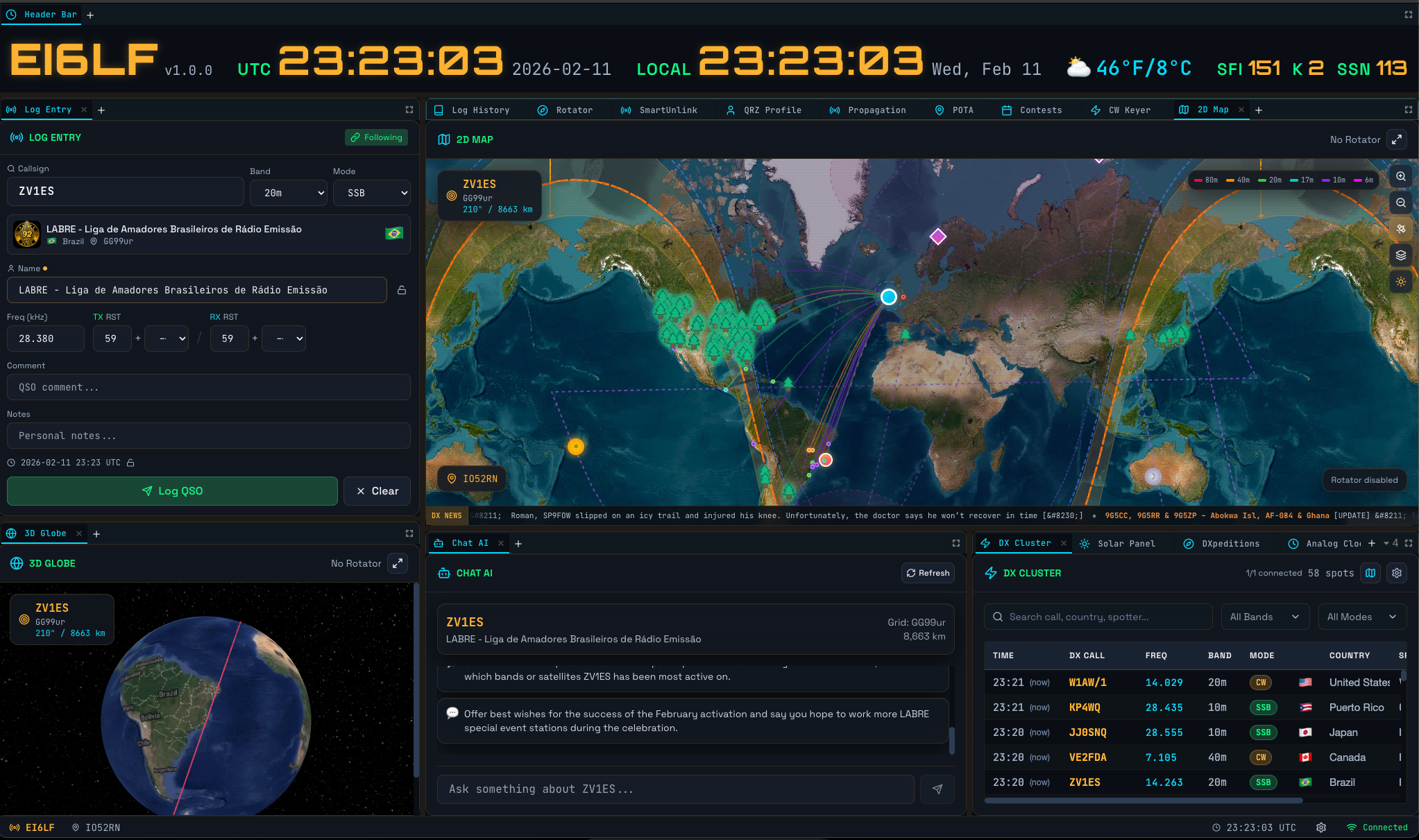
I spent a couple of evenings over the last month or two building Log4YM — a modern, cross-platform logging application for amateur radio. Dockable panels, real-time DX cluster, interactive 3D globe, AI-powered talk points, satellite tracking, the works. I'm biased, but it's genuinely a more powerful logging platform than what's out there.
Done the old way — no agents, no AI pair programming — this would have been a multi-year project. Instead, here it is, built in stolen evenings.
The problem? Probably another ten loggers launched this year. All built with agentic coding help.
The Contribution That Left a Bad Taste
I contributed some of Log4YM's features to OpenHamClock.com — the dockable panels, specifically. It was warmly received. People started donating almost immediately. The maintainer even added a second donate button in the form of PayPal.
I can't quite put my finger on why this left me feeling unimpressed. The maintainer probably won't get rich from it. It's all open source and permissible. But something about the dynamic felt off.
To even the playing field, I took some features from OpenHamClock and brought them into Log4YM. It's all open source after all. That's how it's supposed to work.
But is it?
Thirty Years at the Cutting Edge
I've been writing software professionally for thirty years. I've been at the cutting edge for most of that time — learning new platforms, mastering new paradigms, staying ahead. That accumulated expertise was a competitive advantage. It was the moat.
Agentic coding is eroding that moat.

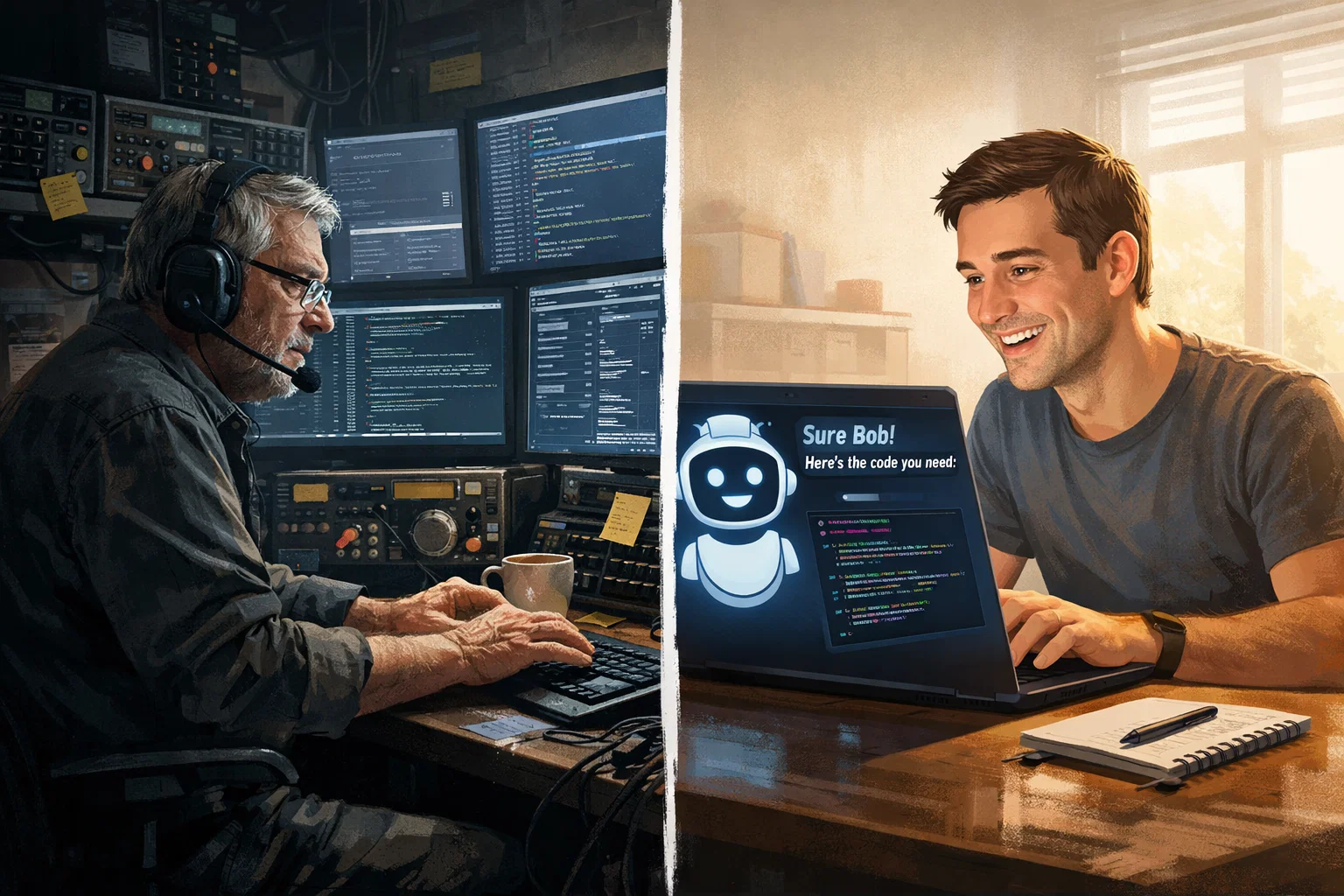
I still feel like I've got my fingers on the pulse. I'm driving the agents hard, and more importantly, in the right direction. But there's no denying that Bob — who has never coded anything in his life — can now churn out something that looks amazing.
The question is: what happens when Bob's creation needs to be maintained?
Lipstick on a Pig
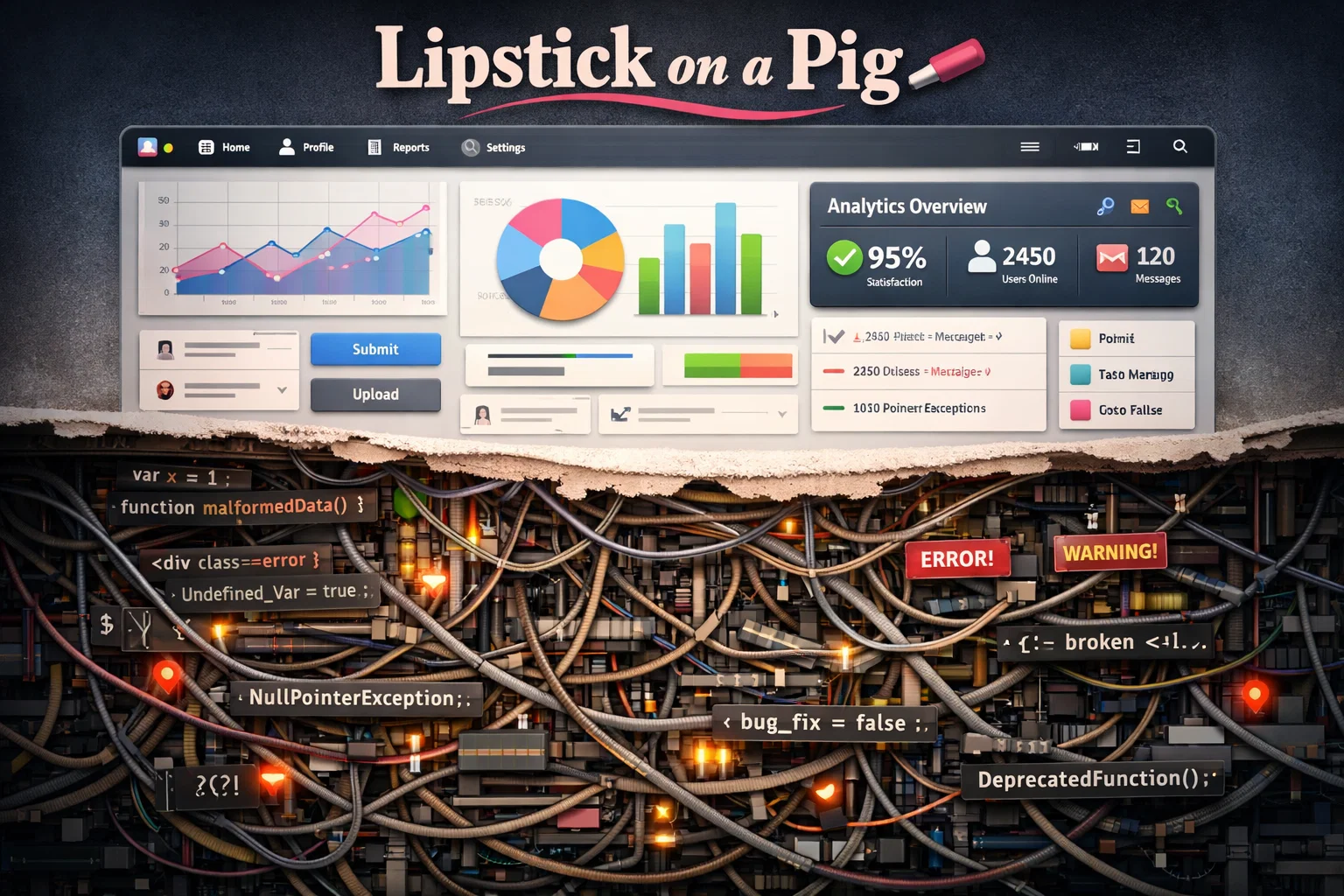
If it's slop — just lipstick on a pig — it's a massive problem for humans to support. It's also harder for agents, though they do make it more bearable. The code agents produce without strong guidance tends to be superficially impressive and structurally fragile. It works until it doesn't, and when it breaks, good luck to whoever drew the short straw.
But does this even matter if agents keep getting better at maintaining their own output? What if the maintenance problem solves itself?
Open Source Isn't Dying. It's Mutating.
What AI has disrupted
Code generation lowered the barrier. Tools like GitHub Copilot and the latest models mean fewer people search Stack Overflow, boilerplate repos get generated instead of forked, and many utility libraries are now one prompt away. Small, single-purpose libraries are less necessary than they were five years ago.
But open source is still the backbone of AI
Ironically, AI is powered by open source — PyTorch, TensorFlow, Linux, Kubernetes. Without open-source ecosystems, modern AI wouldn't exist.
What's actually happening
Some open-source contributions are down. Maintainers report more drive-by AI-generated pull requests, lower-quality issues, and fewer thoughtful contributors. But serious projects are thriving. High-quality, infrastructure-level projects are stronger than ever.
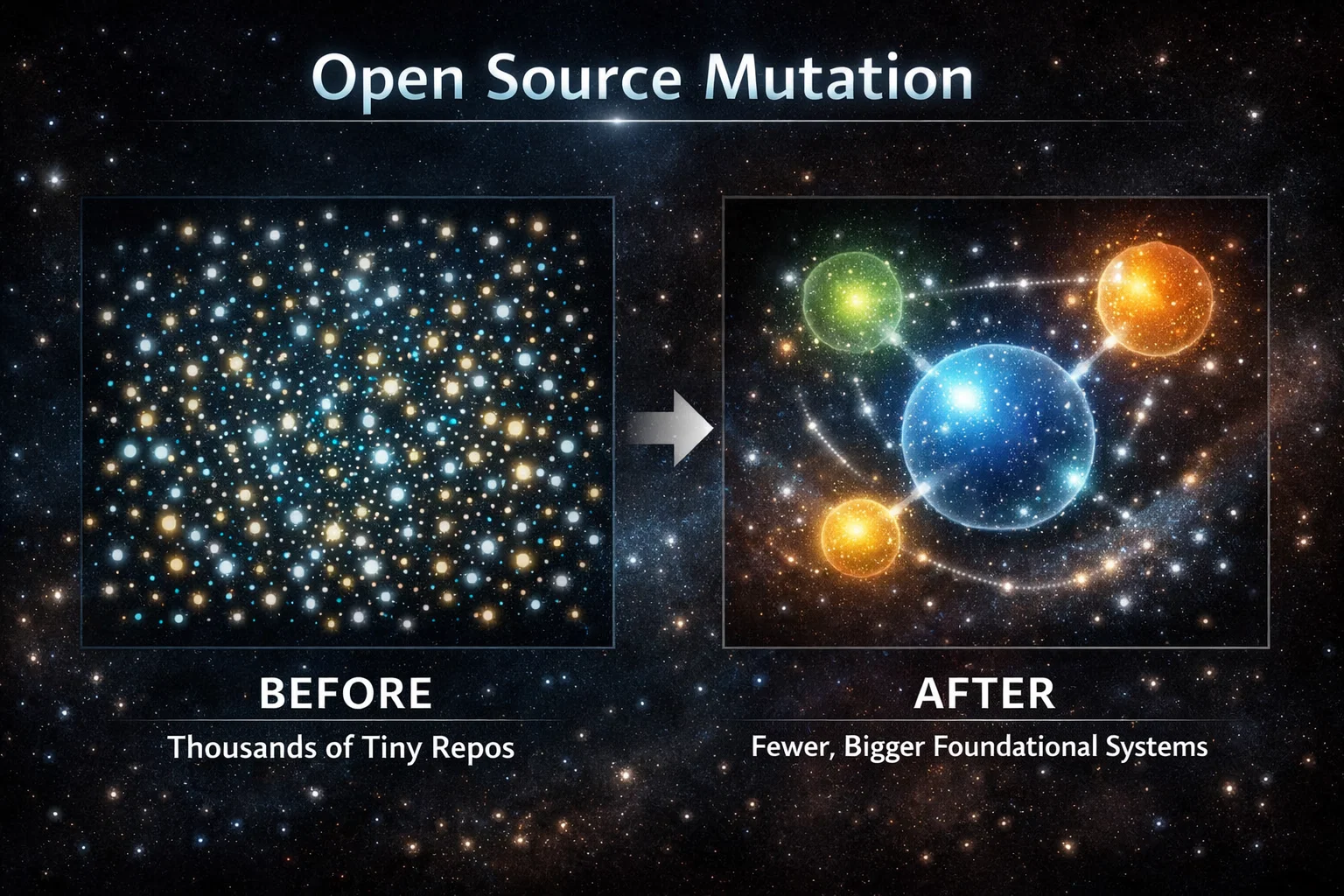
The centre of gravity is shifting from thousands of tiny libraries to fewer, bigger, more foundational systems.
The real tension
Models trained on open-source code. Companies monetise the models. Maintainers often get nothing. That's where the resentment comes from — not from open source being dead.
What AI kills, what it amplifies
AI may kill tutorial repos, boilerplate frameworks, and wrapper libraries. But it probably strengthens deep infrastructure, hard engineering problems, protocols, tooling, and distributed systems.
AI replaces trivial open source. It amplifies serious open source.
The Leverage Era

This is actually a good era to build open source. AI helps you move faster. Niche, well-designed tools still matter. Distribution is the hard part now, not implementation.
If anything, AI has made open source more leverage-heavy — fewer contributors can build much more. A single developer with the right experience and the right agents can build what used to take a team.
But if a single developer can build what used to take a team, what does that mean for teams? For hiring? For the value of a senior engineer versus a junior one with good prompting skills?
I don't have all the answers. I'm not sure anyone does yet. But I know that sitting out this wave isn't an option — and that the developers who'll thrive are the ones asking these questions now, not later.
-- Brian